Probate Is the Smaller Bill: What Deemed Disposition Costs Ontario Families
A couple in the Alliston area, both in healthcare, bought a small cottage north of Collingwood in the late 1990s. This is a composite of a pattern that comes up often in Ontario estates, not one family. They paid it off early. Over the years they also bought a modest rental, filled their RRSPs, and later converted those to RRIFs. By retirement they had done almost everything the conventional advice asks for. No debt. Beneficiaries named on the registered accounts. A will drafted by a local lawyer who told them, correctly, that Ontario's Estate Administration Tax is 1.5% on the value of an estate above $50,000.
That number is what they planned around. Everyone talks about probate because it is easy to see, and it has a clear avoidance strategy. They talked about adding their daughter to the cottage title to keep it out of the estate. Their accountant warned them off, because the transfer itself could trigger tax on half the gain, and the property would be exposed to their daughter's creditors or a future separation. So they left the title alone. That was a reasonable call.
When the husband died, everything rolled to his wife. The cottage, the rental and the RRIF passed to her at their original cost, and no tax was due. That rollover is real and useful, and it also made the eventual bill invisible for another decade.
The second death
The daughter became executor the year her mother died. Within weeks she learned what the probate conversation had left out. Under CRA rules, at death a person is treated as having sold everything they own at fair market value. Canada has no inheritance tax. It has deemed disposition, and it arrives all at once on the final return.
The family home was covered by the principal residence exemption. The cottage was not, and neither was the rental. Each carried roughly twenty-five years of growth. At a 50% inclusion rate, with the estate's income pushed into Ontario's top combined bracket of 53.53%, the tax on those gains works out to a little over a quarter of the gain.
Then there was the RRIF. Registered accounts get no capital gains treatment at death. With no surviving spouse left to roll it to, the entire balance counted as income in that single year, and most of it was taxed at the top rate.
For illustration, take an estate worth about $3 million. Probate on it comes to roughly $44,000. Now suppose $900,000 of gain on the cottage and $600,000 left in the RRIF. The cottage alone produces close to $240,000 in tax. The RRIF adds hundreds of thousands more. Probate turns out to be the smaller bill by a wide margin.
Where the money came from
This is the part executors don't expect. The estate had a high net worth and very little cash. The terminal return deadline does not move to match a slow listing market. The rental had a tenant in place, which complicated a quick sale. So the cottage went first, listed in the fall and sold below what the family believed it was worth, because the CRA wanted payment and the alternative was interest on the balance owing.
The daughter had wanted to keep that cottage. So had her brother. Nobody had ever asked whether the estate could afford to hand it to them.
None of the parents' decisions were careless. Paying off the cottage, avoiding joint title, naming beneficiaries: each one held up on its own. What was missing was any plan for liquidity at the second death. That plan could have taken the form of permanent life insurance sized to the deferred tax, or a deliberate choice about which property to designate as the principal residence. It could also have meant drawing the RRIF down at lower brackets earlier, or using a line of credit against the paid-off home to gift to the children during the parents' lifetimes, which thins the estate on purpose.
The daughter and her husband are in their forties now, both working, with a home in Simcoe County and a mortgage they are restructuring. Their first meeting was not about the rate. It was about what their own balance sheet will look like the year the last of them dies, and who will be holding the cash when it does.


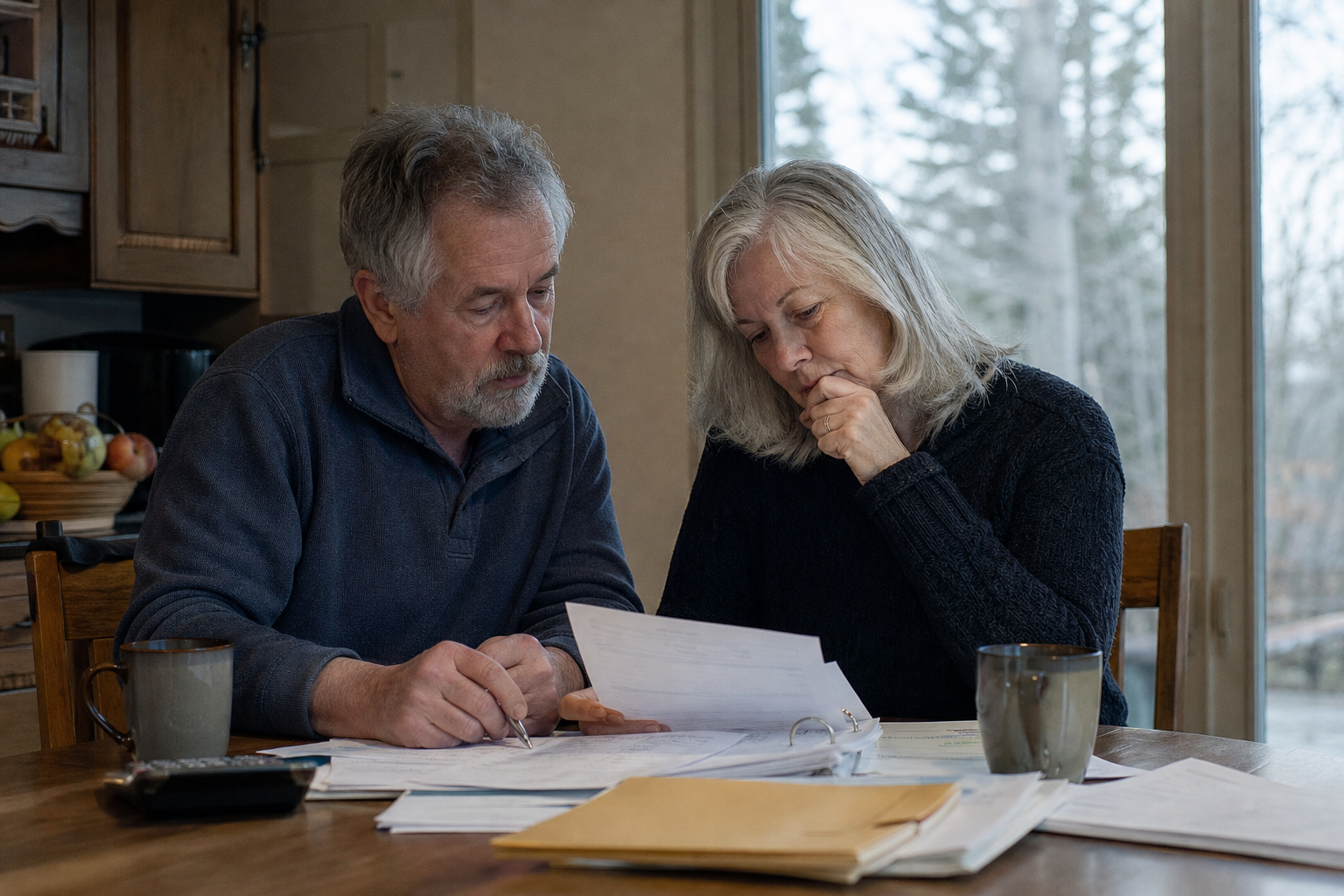
A couple in the Alliston area, both in healthcare, bought a small cottage north of Collingwood in the late 1990s. This is a composite of a pattern that comes up often in Ontario estates, not one family. They paid it off early. Over the years they also bought a modest rental, filled their RRSPs, and later converted those to RRIFs. By retirement they had done almost everything the conventional advice asks for. No debt. Beneficiaries named on the registered accounts. A will drafted by a local lawyer who told them, correctly, that Ontario's Estate Administration Tax is 1.5% on the value of an estate above $50,000.
That number is what they planned around. Everyone talks about probate because it is easy to see, and it has a clear avoidance strategy. They talked about adding their daughter to the cottage title to keep it out of the estate. Their accountant warned them off, because the transfer itself could trigger tax on half the gain, and the property would be exposed to their daughter's creditors or a future separation. So they left the title alone. That was a reasonable call.
When the husband died, everything rolled to his wife. The cottage, the rental and the RRIF passed to her at their original cost, and no tax was due. That rollover is real and useful, and it also made the eventual bill invisible for another decade.
The second death
The daughter became executor the year her mother died. Within weeks she learned what the probate conversation had left out. Under CRA rules, at death a person is treated as having sold everything they own at fair market value. Canada has no inheritance tax. It has deemed disposition, and it arrives all at once on the final return.
The family home was covered by the principal residence exemption. The cottage was not, and neither was the rental. Each carried roughly twenty-five years of growth. At a 50% inclusion rate, with the estate's income pushed into Ontario's top combined bracket of 53.53%, the tax on those gains works out to a little over a quarter of the gain.
Then there was the RRIF. Registered accounts get no capital gains treatment at death. With no surviving spouse left to roll it to, the entire balance counted as income in that single year, and most of it was taxed at the top rate.
For illustration, take an estate worth about $3 million. Probate on it comes to roughly $44,000. Now suppose $900,000 of gain on the cottage and $600,000 left in the RRIF. The cottage alone produces close to $240,000 in tax. The RRIF adds hundreds of thousands more. Probate turns out to be the smaller bill by a wide margin.
Where the money came from
This is the part executors don't expect. The estate had a high net worth and very little cash. The terminal return deadline does not move to match a slow listing market. The rental had a tenant in place, which complicated a quick sale. So the cottage went first, listed in the fall and sold below what the family believed it was worth, because the CRA wanted payment and the alternative was interest on the balance owing.
The daughter had wanted to keep that cottage. So had her brother. Nobody had ever asked whether the estate could afford to hand it to them.
None of the parents' decisions were careless. Paying off the cottage, avoiding joint title, naming beneficiaries: each one held up on its own. What was missing was any plan for liquidity at the second death. That plan could have taken the form of permanent life insurance sized to the deferred tax, or a deliberate choice about which property to designate as the principal residence. It could also have meant drawing the RRIF down at lower brackets earlier, or using a line of credit against the paid-off home to gift to the children during the parents' lifetimes, which thins the estate on purpose.
The daughter and her husband are in their forties now, both working, with a home in Simcoe County and a mortgage they are restructuring. Their first meeting was not about the rate. It was about what their own balance sheet will look like the year the last of them dies, and who will be holding the cash when it does.
Read Next
Coming soon